
Meta Martis indexes media archives with AI that runs on your premises and writes the results back into the library you already use. Built on Amplify Seiri, it transcribes speech, identifies people, places, logos and on-screen text, recognizes scenes and objects, and classifies and summarizes content, so your team can search it in your own system. With Meta8 OnPrem, Amplify Seiri indexing is available as an option in your contract.
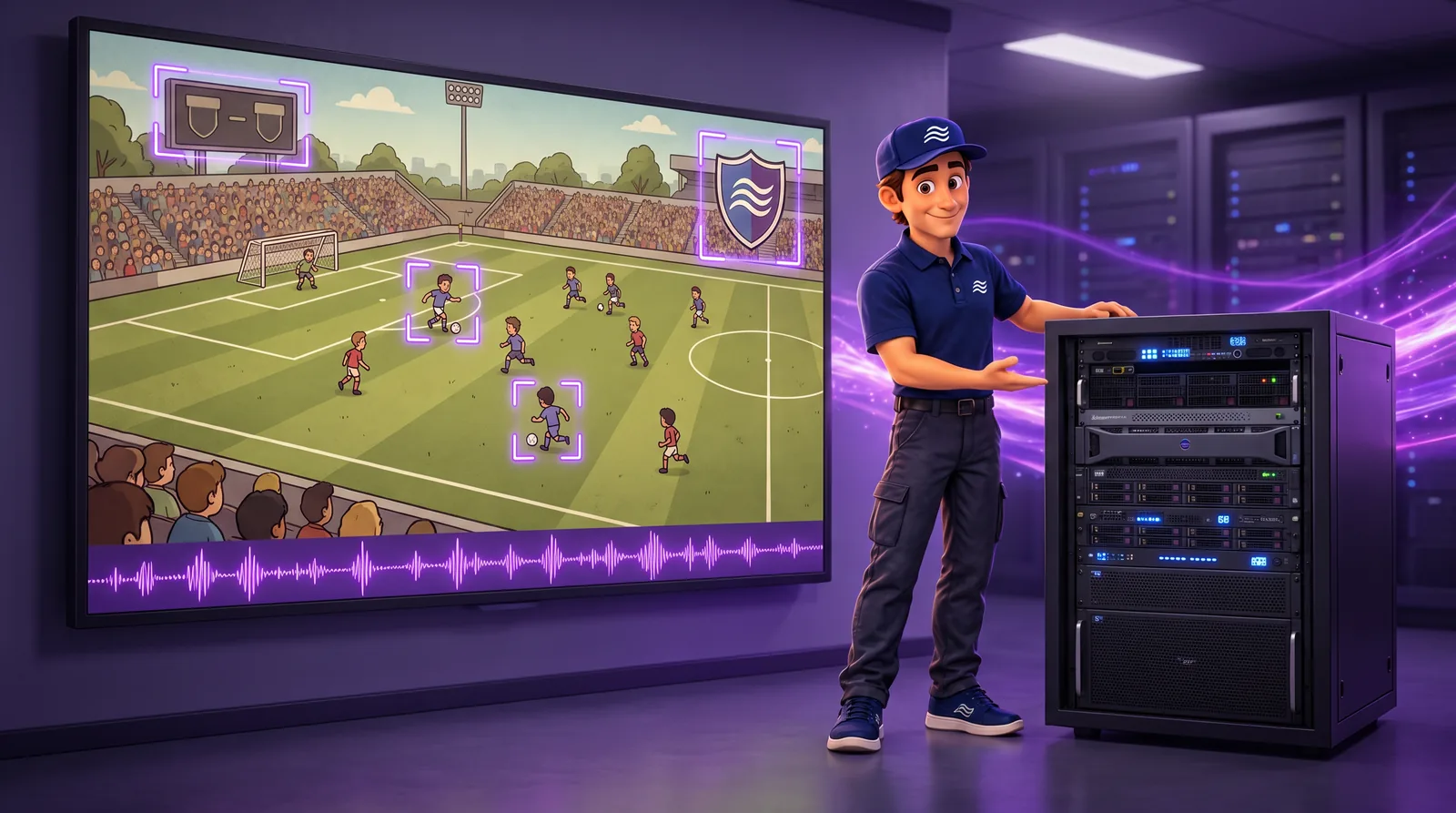
What gets indexed
- Speech
- People, places and logos
- On-screen text
- Scenes and objects
- Classification and summaries
Story separation
Many archive tapes hold several stories, segments or programs on one reel. AI indexing splits these tapes into their separate stories and scenes.
Results land in your library
Metadata is written back into your existing media asset management system rather than a separate portal. Amplify Seiri integrates with media asset and playout systems including Dalet, DIVA, Adobe, Elements and Orange Logic.
On your premises
Indexing runs on GPU servers beside your storage, not in a public cloud. Your content is not sent out for analysis or used to train anyone else’s AI. See Security and data control.
Indexing capacity
About 1,200 video hours per month per GPU. Add GPUs as volume grows.
| GPUs | Approximate hours indexed per month |
|---|---|
| 1 | 1,200 |
| 4 | 4,800 |
| 12 | 14,400 |
Files from a videotape migration or from data tape are indexed as they land.
Questions
Does our content go to a public cloud for AI processing?
No. Indexing runs on GPU servers in your building, and the metadata goes to your own library system.
How fast is AI indexing?
About 1,200 video hours per month per GPU. A twelve-GPU system indexes roughly 14,400 hours a month.
Which systems does it write metadata to?
Your existing media asset management system. Amplify Seiri integrates with systems including Dalet, DIVA, Adobe, Elements and Orange Logic.
Can it split tapes that hold several stories?
Yes. It splits a tape into its separate stories and scenes.
Tell us how many hours you hold in the Free Archive Assessment, and we will size the indexing to match.